

Supporting people to retire well at scale
Australia Post Case Study
Australia Post
Participants
States
The Opportunity
Australia Post is one of Australia's largest and most culturally diverse employers. With approximately 35,000 people working across major processing facilities nationwide, spanning dozens of languages, cultural backgrounds, and literacy levels, and with many workers having spent 30, 40, or even 50 years at the same facility, the organisation recognised it needed a thoughtful, culturally sensitive approach to supporting its ageing workforce through retirement.
For many long-serving employees, work was their entire social world. In some facilities, these team members were more than colleagues; they were literally family. Across many depots, multiple generations of the same household work side-by-side on the same shift. The prospect of retirement for these employees meant not only leaving a role, but potentially severing the connections that gave daily life its meaning. Taking the first steps towards retirement wasn't an easy or individual decision; it was a collective one.
Traditional retirement education often focuses heavily on finances. While financial readiness was important, Australia Post's workforce required something broader: support for the psychological, social and identity changes that retirement brings.
Australia Post also needed a partner with genuine national reach: facilities operating 24 hours a day across metropolitan and regional Australia meant sessions needed to run at 11pm or 6am, at short notice, wherever the workforce was.
"When people were deciding to retire, they agreed as a group to go together so that they could create that community outside of work. They didn't just transport their working life into retirement — they transported their community."
The Approach
Rather than treating retirement as a single workshop or event, Transitioning Well designed a multi-layered approach that recognised retirement as a workforce transition, an identity transition and, for many employees, a community transition.

Supporting leaders first

Planning with purpose

Tailored workshops

Post-retirement leadership support
- Leaders were often the first people employees turned to when considering retirement, yet many felt uncertain about how to start these conversations. Training focused on building confidence, capability and understanding around the broader impacts of retirement.
- The Psychological Capital framework helped participants move beyond simply thinking about retirement to actively planning for what would give life meaning, structure and purpose afterwards.
- Sessions explored not only the practical aspects of retirement, but also the loss of routine, identity shifts, changing social networks and opportunities for building new sources of purpose and connection.
- As retirement cohorts departed, leaders faced new workforce dynamics, including knowledge transfer, changing team cultures and the integration of younger employees. Dedicated sessions helped leaders navigate these shifts and maintain team cohesion.
It's really critical to bring leaders into the transition really early... helping them understand what it's like to have a retirement conversation.
Navigating the complexity of a diverse workforce
One of the most distinctive features of the Australia Post program was its cultural sensitivity. Rather than treating retirement as an individual journey, the program acknowledged that for many employees — particularly those from culturally tight-knit communities — retirement was something they would consider, and ideally undertake, as a group.
Rather than assuming a one-size-fits-all approach would succeed, the program was adapted to reflect the realities of each workforce community. Facilitators identified trusted individuals within facilities who could help socialise the program, answer questions and encourage participation.
This approach recognised that retirement decisions were often influenced by family, peers and community networks rather than being made independently.
Delivery was also adapted to accommodate different literacy levels, cultural backgrounds and work patterns, ensuring employees could engage with the material in ways that felt accessible and relevant.
RESULTS
The program helped shift retirement from a topic many employees avoided to one they felt more confident discussing and planning for.
Participant Satisfaction
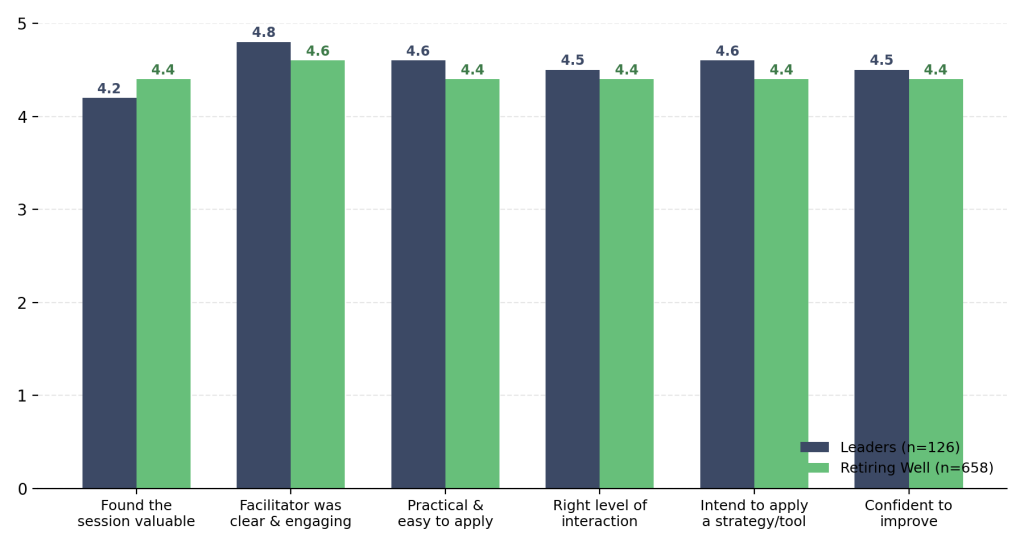
Scores above are reported on a 5-point scale.
Across both workshops, qualitative feedback reflected a shift from avoidance to action. Employees described leaving sessions with something they hadn't walked in with: a plan, a purpose, and a sense that retirement could be approached with optimism rather than avoidance. Leaders reported feeling equipped to initiate conversations they'd previously found awkward.
I thought I was prepared, but I was nowhere near as prepared as I thought. Now I feel much better, knowing what I have to do.
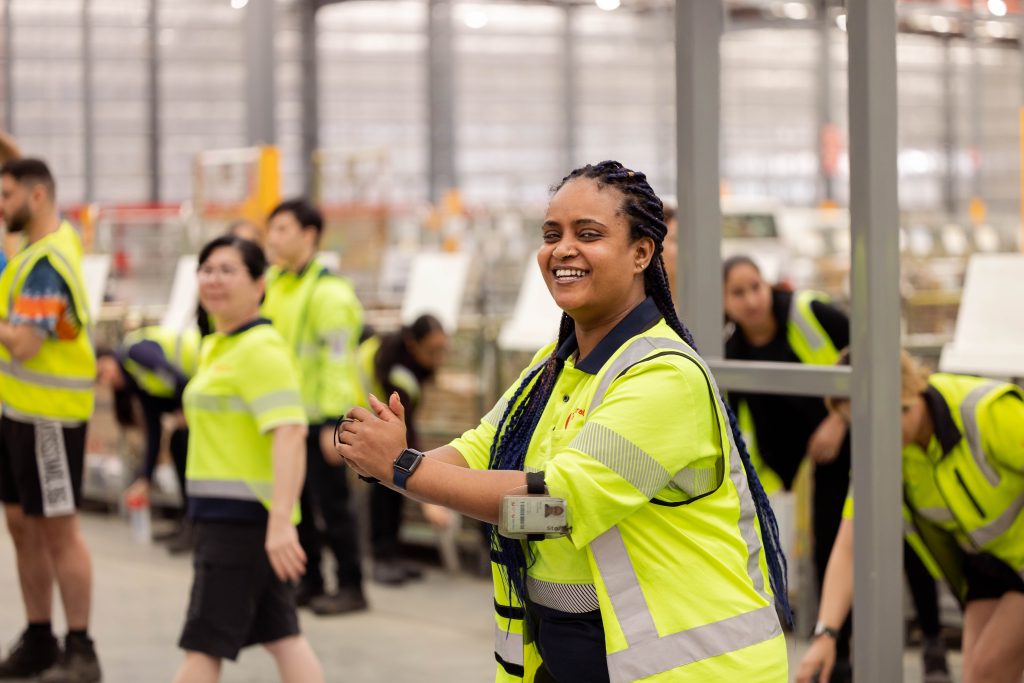
Multigenerational team building
Retirement support didn't end when employees left. The departure of long-serving team members created significant organisational change, requiring leaders to support new team dynamics and maintain culture. As retirement cohorts left and younger workers joined, leaders faced a new challenge: managing teams that looked and operated very differently from the ones they'd known.
Transitioning Well delivered a further session focused on building belonging across multiple generations, helping leaders adapt their style and create inclusive team cultures in the wake of significant workforce change.
Once people go through the program, we always reach out to the facility manager and ask what the chats have been like following the sessions. And they always say — fantastic, everyone thought it was a great session.
Program scale: from pilot to business as usual
What began as a single-facility pilot at Dandenong has grown into a nationally delivered program for over 700 employees across Victoria, New South Wales, Queensland, South Australia, and Western Australia. Sessions have run at all hours, from 6am to 11pm, reflecting the realities of their 24-hour operation.
The success of the initial pilot demonstrated that retirement transition support could be delivered effectively at scale, even within one of Australia's most operationally complex workforces.
Australia Post's goal is now to embed the program as business-as-usual, running approximately five cohorts per year.
The alumni program demonstrated that retirement is an ongoing transition. Maintaining opportunities for connection helps people continue to build community, purpose and belonging beyond the workplace.
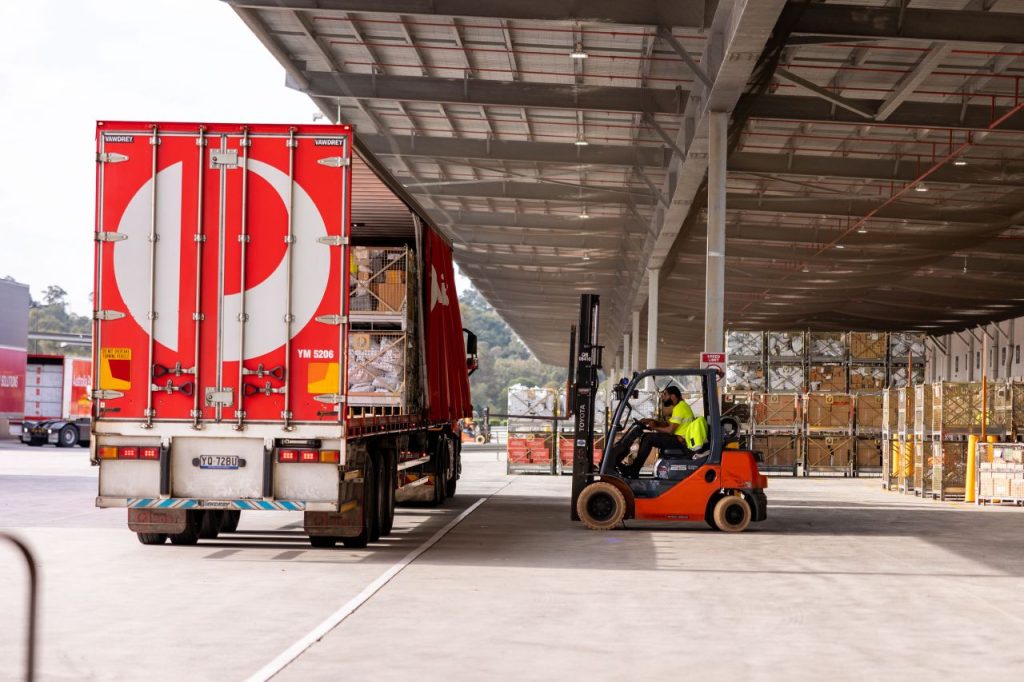
One of the things we thought was really important was creating an alumni group for people who are retiring, and reconnecting with the people they used to work with and reconnecting as a group.
Interested in how we can support your organisation's ageing workforce?

Our national team of psychologists bring evidence-based approaches and practical strategies to the table, supporting your people at the important intersection where work meets life.
The Retirement Transition Program is designed to ease the challenges that come with leaving the workforce and to help your people leverage the strengths, experience, and perspective they've built over a lifetime of work. In addition to group workshops, we tailor support around the unique needs of your organisation, including individual coaching, leader sessions, and culturally adapted delivery for diverse workforces.
Retirement is not an ending. It's a transition. When organisations support that transition well, they strengthen outcomes for employees, leaders and the workforce they leave behind.