


“We understand physical risk, but we’re not yet there with psychosocial risk.”
Most organisations aren’t ignoring psychosocial risk. They’re just newer to it.
Physical risk has decades of established practice behind it; training, protective equipment, clear procedures, leaders who understand that safety conversations start long before an incident occurs. Psychosocial risk, particularly exposure to traumatic material, hasn’t had the same runway.
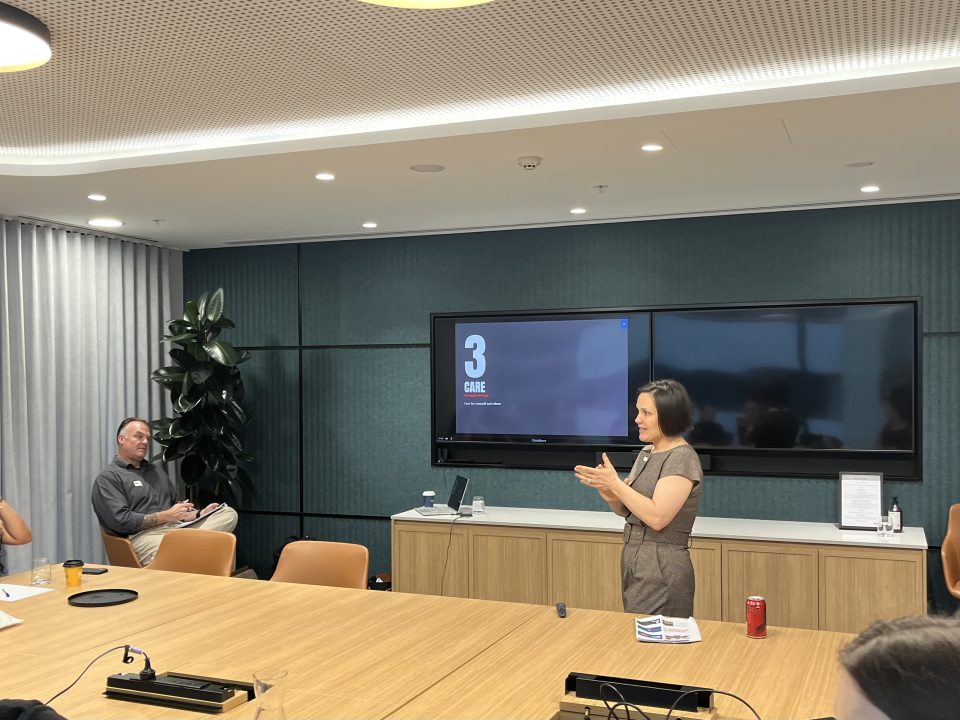
“Everyone needs a bit of help fully understanding psychosocial risk,” says Dr. Eleanor De Ath-Miller, Principal Organisational Psychologist at Transitioning Well. “We’ve still got people on boards saying, ‘Stress leave? What’s that going to cost us?'”
That’s not a failure of intent. It’s a gap in maturity, and it’s closing slower than it needs to, because too often the assumption is still that if someone struggles, the issue sits with the individual.
The reality is far more complex.
Whether it’s legal services, healthcare, customer service, content moderation or frontline support roles, exposure to traumatic material is increasingly recognised as a workplace hazard.
Australia’s psychosocial hazard regulations have reinforced that shift, requiring employers to identify and manage risks to psychological health in much the same way they manage physical risks.
Yet many organisations are still better at responding to psychological harm than preventing it.
According to Eleanor, that’s where the conversation needs to shift.
“The business case for doing this is extremely strong,” she says. “Psychological injury costs more on average than physical injury in terms of compensation claims, and people are often off work for longer. If organisations don’t pay attention, there are significant human and economic impacts.”
Early intervention
“Often something goes wrong before organisations ask for help,” Eleanor says.
It’s a pattern familiar to many organisations. Support is introduced after a claim. Training arrives after an incident. Conversations about exposure begin once someone is already struggling.
But by that point, the conversation has already shifted from prevention to recovery.
“The ideal is for organisations to be proactive and a bit vulnerable,” says Eleanor. “To say, ‘We’ve got some high risk here.’ And then look for solutions. Don’t wait for someone to put in a claim.”
In addition to interventions that are focused solely at the necessary ‘prevention’ end (i.e., how can we reduce the chance employees are exposed to potentially traumatic material in the first place), we can also start at the beginning of the employee life-cycle by focusing on realistic job previews. Rather than focusing exclusively on technical requirements, realistic job previews provide candidates with a genuine understanding of the role, including the types of traumatic material they may face and the emotional demands involved.
Research suggests this approach supports informed decision-making and self-selection, allowing candidates to assess whether the work is right for them before they accept the position.
It also sends an important message: we understand what this work involves, and we’re prepared to talk about it openly.
The frontline is broader than most organisations realise
When people think about trauma exposure, they often picture traditional frontline professions.
Paramedics. Police officers. Social workers, but that’s no longer the case.
Amy Nicholas’ recent Churchill Fellowship research highlights the growing recognition that trauma exposure can occur anywhere traumatic material is handled, viewed, discussed or processed. That includes investigators, lawyers, customer support teams, researchers, administrators and a growing number of digital-focused roles.
Trauma doesn’t need to be witnessed to be absorbed. In many workplaces, exposure occurs through documents, recordings, images, case files and conversations.
As trauma-related work becomes increasingly distributed across organisations, the challenge for employers is identifying where exposure exists and ensuring employees understand what they’re stepping into.
Why screening isn’t the answer many leaders hope it is
Whenever organisations recruit for trauma-exposed roles, the conversation often returns to the same question.
Can we identify who will cope?
It’s an understandable instinct. Leaders want certainty, but the evidence suggests psychological screening is not the silver bullet many hope it will be.
Research examining pre-employment psychological screening in high-risk occupations has found limited evidence that it reliably predicts future psychological outcomes. More importantly, it can create a false sense of confidence that risk has been managed.
A highly capable employee can still experience harm if exposure is poorly managed, workloads are excessive, supervision is inconsistent or support structures are absent.
Onboarding is where culture becomes visible
If recruitment is where expectations are set, onboarding is where they are tested. This is the point where organisations unintentionally communicate what really matters.
- Do leaders talk openly about psychological health?
- Are people encouraged to raise concerns early?
- Is support normalised, or only discussed when someone reaches crisis point?
Research suggests trauma-informed training can improve knowledge, confidence and preparedness when working with trauma-exposed populations. Mentoring and structured support also play an important role, particularly during the first months in a role when employees are still developing confidence and learning how to navigate emotionally demanding work.
For Eleanor, this is where psychosocial safety becomes tangible. Employees need to know that experiencing distress is not a sign of weakness. It is a normal human response to difficult material. The role of the organisation is to create conditions where concerns can be raised early and support can be accessed without stigma.
The shift leading organisations are starting to make
For years, conversations about trauma exposure focused heavily on resilience.
- How do we help them cope?
- How do we support recovery?
- How do we reduce unnecessary exposure in the first place?
The organisations making the biggest progress aren’t waiting for harm to occur. They’re identifying psychosocial risks during recruitment, considering exposure pathways when roles are designed, and building controls into the work that are constantly reviewed and improved.
The legislation is in place. The challenge now is for organisations to design roles with the same care, rigour and attention they would apply to any other workplace hazard.
Read next:
Qantas: Trauma-Informed Practices Case Study
Transitioning Well partnered with Qantas to help train their managers and teams to deal with complex callers.